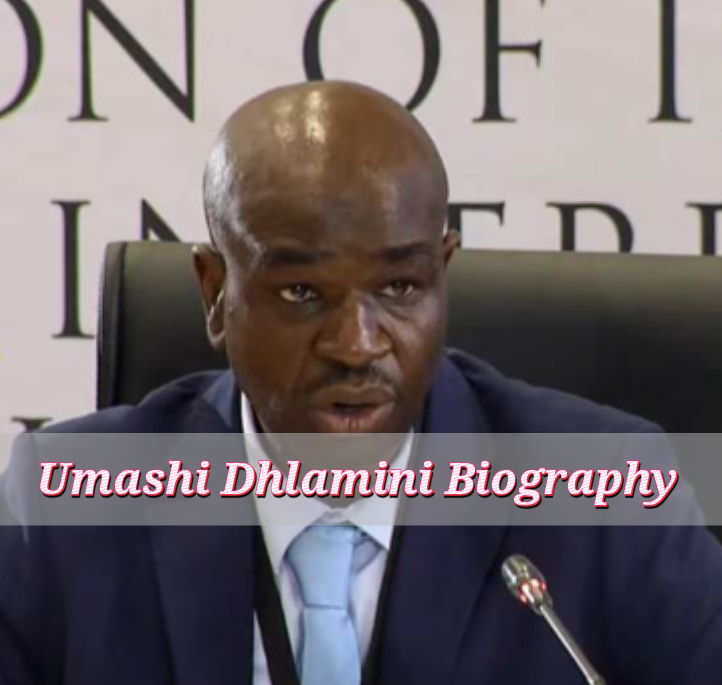
Umashi Dhlamini Biography
Umashi Samson Dhlamini was born in Soshanguve, a township in the Pretoria region of Gauteng Province, South Africa. He holds South African nationality.
Umashi Samson Dhlamini rose through the ranks to become a senior official in one of South Africa’s key metropolitan police services. As Deputy Chief of the Tshwane Metro Police Department, he managed support services and administrative functions in a demanding environment focused on urban safety and public order. His professional path highlights the experiences of many committed civil servants who balance leadership duties with community expectations. However, recent developments have placed him at the centre of national conversations regarding transparency and ethical practices in local government.
Umashi Dhlamini Early Life and Background
Umashi Samson Dhlamini was born around 1984 in Soshanguve, Gauteng. The township, situated north of Pretoria, offered a lively but humble setting during the closing phase of apartheid and the start of democracy. Growing up there introduced him to the practical challenges of daily life in South Africa and the value of strong community networks. He received his foundational schooling at Entokozweni Primary School. Those early experiences fostered an awareness of social needs and the benefits of equal access to resources.
In his youth, Dhlamini became actively involved in his family’s taxi operations. From 1996 onward, he played a direct part in running the business. This practical engagement built his abilities in areas such as transport coordination, client service, and general management. The family venture provided essential mobility links within townships and surrounding urban zones. During this period, he formed enduring personal relationships in his local area. A notable example is his long-term friendship with Sergeant Fannie Nkosi, whom he regards as a brother. Their connection stems from shared childhood surroundings rather than any workplace ties.
Dhlamini also took part in student initiatives that advocated for improved schooling and greater fairness in society. These efforts reflected his dedication to community progress. As a devoted Christian, he has drawn strength from his beliefs across different stages of life. He tends to maintain privacy around family matters and prioritises personal values and public duty over open political involvement. His upbringing in Soshanguve laid important groundwork for his future work in law enforcement, where he drew on principles of accountability and service to others.
Umashi Dhlamini Education
Available information on Umashi Dhlamini’s advanced studies is not extensive. He finished primary education at Entokozweni Primary School in Soshanguve. Consistent with many individuals of his era in South Africa, he combined learning with family obligations, such as assisting in the taxi enterprise. His direct participation in community and commercial activities from an early stage added valuable real-life insights to his formal schooling. These practical lessons in oversight and relationship management later supported his advancement in policing, even though detailed records of university-level qualifications are not broadly available. His trajectory shows how applied experience alongside academic foundations can support a meaningful professional journey.
Umashi Dhlamini Career
Umashi Dhlamini entered the Tshwane Metro Police Department and progressed steadily to higher positions. He assumed growing duties in operational backing and organisational management. By the middle of the 2010s, he had attained the rank of Deputy Chief. In that capacity, he directed important functions including asset allocation, staff oversight, and initiatives to boost safety standards throughout the City of Tshwane. The department manages vital responsibilities such as traffic control, preventing crime, and addressing city-specific issues like illegal land occupation and large public gatherings. Dhlamini played a part in making the organisation more effective and better attuned to residents’ requirements.
His duties frequently required collaboration with various entities to uphold stability in a dynamic urban setting. Associates have highlighted his emphasis on realistic solutions and enhancements to internal processes. For example, he supported measures for smoother traffic handling and preparedness during significant events in the administrative capital. The taxi sector, a cornerstone of transport in the country, often intersects with metro police activities. Dhlamini’s background in this field from his family provided useful perspective, though he maintained a clear separation between personal interests and official responsibilities.
Around 2015, news coverage examined Dhlamini’s living situation. He had constructed a high-value residence in Heatherdale, Pretoria North, estimated at roughly R10 million, on a salary reported at about R60,000 per month. Concerns also surfaced regarding security agreements granted to businesses associated with relatives. Companies such as Harama Security Services, connected through his sister-in-law, secured deals worth approximately R60 million from 2009 to 2013. Similar links existed with Rivongo Security Services. Probes by the Public Protector reviewed possible conflicts, yet records indicated Dhlamini did not participate in tender evaluation panels. City representatives noted at the time that standard procedures had been observed. These issues drew attention to wider matters of openness in government contracting, but Dhlamini remained in his post and continued focusing on his core policing tasks.
Over his years of service, Dhlamini promoted honest behaviour and dedication to citizens. He operated in a context where metro officers deal with expanding city populations and constrained budgets. His guidance contributed to better administrative frameworks inside the department. Up to his suspension in early 2026, he had gained substantial expertise in one of the nation’s busiest municipal police units. His professional story demonstrates the careful navigation required between private connections and official duties in the public domain.
Personal Life
Umashi Dhlamini generally maintains discretion about his private affairs. He is married and holds a deep commitment to his Christian beliefs. Family plays a foundational role in his outlook, and he has expressed the significance of faithfulness and moral principles. His siblings manage the family taxi concern, and he has clearly stated his non-involvement in routine activities to prevent any appearance of overlap with his law enforcement position.
One important relationship is his longstanding friendship with Sergeant Fannie Nkosi. The pair grew up in the same Soshanguve community and stayed close over the decades. Dhlamini has shared how locals turned to him for support in traditional marriage arrangements for Nkosi, and he provided guidance on marital matters through the years. Such accounts, which surfaced in public statements, confirm that their association arose from local roots instead of work-related matters. Dhlamini has underlined that personal bonds do not affect his formal choices.
He avoids active involvement in party politics and concentrates on contributing through his policing role. This stance aligns with his aim to preserve trustworthiness in public work. In summary, Dhlamini’s private world revolves around close relatives, spiritual faith, and efforts to distinguish personal life from professional obligations.
Recent News
In March 2026, authorities in the City of Tshwane suspended Umashi Dhlamini from his duties as Deputy Chief of the Tshwane Metro Police Department. The step came after claims presented during the Madlanga Commission of Inquiry. This independent investigation looks into contracting methods and possible issues inside the municipality and associated bodies. Sergeant Fannie Nkosi, Dhlamini’s longtime associate, gave evidence suggesting he had consulted Dhlamini about a major security contract aimed at preventing land invasions. Nkosi indicated that Dhlamini offered input on meeting requirements and mentioned suitable providers.
Dhlamini himself asked for the suspension so the commission could continue its work uninterrupted. He appeared to testify in April 2026 and faced further questioning on 28 April. In his statements, he strongly rejected any participation in manipulating contracts or exerting undue influence. He clarified that he held no monetary or managerial connections to the firms that received the work. Dhlamini described his exchanges with Nkosi as entirely personal and based on their common background in Soshanguve. He dismissed notions of political meddling involving groups like the EFF or ActionSA, noting that certain named people were only casual acquaintances from earlier years.
Evidence sessions also addressed the family taxi operations. Dhlamini acknowledged that his brothers oversee the activities and that he has no active part. He responded to queries about messages and billing documents while insisting that everything remained lawful. The commission received information on extended unpaid city invoices that he assisted in resolving to protect the municipality from court proceedings. As of the end of April 2026, the review is still in progress, with no definitive rulings on the raised concerns. Dhlamini has repeatedly affirmed his innocence and noted that he stepped down willingly to support a fair examination. These events have prompted broader discussions on responsibility in city management and the difficulties of handling personal ties while holding public positions.
Conclusion
The experiences of Umashi Samson Dhlamini provide insight into the demands of public service in contemporary South Africa. Starting from his origins in Soshanguve and advancing to a leadership position in the Tshwane Metro Police Department, he has shown commitment to maintaining order and protecting residents. His narrative encompasses successes in managing operations alongside times of public examination concerning contracting decisions. Throughout, Dhlamini has asserted that his conduct followed standards of honesty and a focus on effective community support.
The continuing Madlanga Commission raises key topics about openness, potential conflicts, and moral guidelines within state bodies. Whatever the eventual results, Dhlamini’s situation mirrors the intricate pressures encountered by officials in challenging settings. His path serves as a reminder of the importance of robust supervision together with appreciation for those who dedicate themselves to safeguarding society. As the country works to reinforce its systems of governance, examples like this one will influence upcoming approaches to administration and integrity. Dhlamini continues as a public figure whose career developments attract ongoing interest.
FAQs
Who is Umashi Samson Dhlamini?
Umashi Samson Dhlamini is a South African policing professional who held the position of Deputy Chief in the Tshwane Metro Police Department until his suspension in March 2026. He is recognised for his contributions to public safety management and has featured prominently in the Madlanga Commission of Inquiry.
Where was Umashi Dhlamini born and what is his nationality?
He was born around 1984 in Soshanguve, Gauteng Province, South Africa, and is a South African citizen.
What is Umashi Dhlamini’s educational background?
He completed primary studies at Entokozweni Primary School in Soshanguve. Details on further education are scarce in public sources, although his early work in the family business offered hands-on training in management.
What led to Umashi Dhlamini’s suspension in 2026?
Suspension followed claims of contracting irregularities discussed at the Madlanga Commission. Dhlamini requested the measure himself and has rejected all accusations of misconduct in his testimony.
Does Umashi Dhlamini have ties to the taxi industry?
His family runs a taxi service, with his brothers taking the main role in operations. Dhlamini has explained that he separated himself from everyday involvement once he pursued a full-time career in policing.
What is the current status of the Madlanga Commission inquiry involving Umashi Dhlamini?
As of late April 2026, the commission is still active. Dhlamini has provided evidence and denied any improper conduct. Final determinations have not yet been made.
How has Umashi Dhlamini responded to the allegations against him?
He has firmly denied any improper actions, highlighted the personal character of his connections with witnesses, and supported the process by accepting voluntary suspension.